Buy designinwhite.eu ?
We are moving the project
designinwhite.eu .
Are you interested in purchasing the domain
designinwhite.eu ?
domain@kv-gmbh.de · 0541-91531010
Buy designinwhite.eu ?
How do you calculate the braking distance, the braking process, and the braking deceleration?
The braking distance can be calculated using the formula: braking distance = (initial velocity^2) / (2 * deceleration), where the deceleration is the rate at which the vehicle slows down. The braking process involves the driver applying the brakes, which causes friction between the brake pads and the wheels, leading to a decrease in the vehicle's speed. The braking deceleration can be calculated by dividing the change in velocity by the time it takes for the vehicle to come to a complete stop. **
How do you calculate the braking time and braking distance?
Braking time and braking distance can be calculated using the formula: Braking distance = (initial velocity^2) / (2 * deceleration) Where initial velocity is the speed of the vehicle before braking, and deceleration is the rate at which the vehicle slows down. Braking time can be calculated by dividing the braking distance by the initial velocity. These calculations are based on the assumption of constant deceleration, and may vary depending on factors such as road conditions and the vehicle's braking system. **

Similar search terms for Braking
Top-Angebote
Products related to Braking:
-
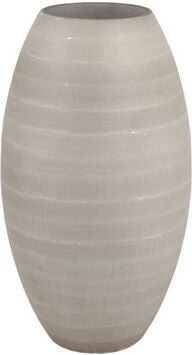
Sagebrook Home Stoneware Decorative Vases Contemporary Minimalist Sleek (Set of 3)Bring artful sophistication to your home or office with this set of 3 decorative vases expertly crafted from stoneware and ceramic for long-lasting style and quality.79,49 $*Shipping: 0,00 $Secure redirect to the provider
-
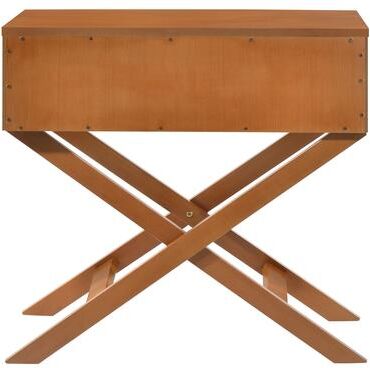
Elegant Oak Contemporary Nightstand"Nightstand dimensions: 25""H x 27""W x 16""D Includes a single drawer for convenient storage Croc textured drawer front adds a stylish accent Assembly is required for personalized setup Modern design enhances any bedroom decor effortlessly"187,99 $*Shipping: 0,00 $Secure redirect to the provider
-
Uplift Essentials Elegant Floral Engraved Bracelet Watch Luxury Fashion Dress Wristwatch For Sophisticated Women gold"Embrace a touch of botanical beauty and highfashion luxury with a timepiece that celebrates feminine detail. This premium luxury bracelet watch is a masterclass in ""Romantic Minimalism,"" featuring an exquisitely engraved band that turns a..."68,97 $*Shipping: 0,00 $Secure redirect to the provider
-
Sagebrook Home Modern Aluminum & Iron Decorative Vase - Sleek Contemporary Metal AccentThis will be a perfect addition to add to your home decor, also a perfect gift for a loved one. Can be added to your table, console or bookcase for a distinctive style to match any decor.221,99 $*Shipping: 0,00 $Secure redirect to the provider



-
What are the differences between braking to walking speed and braking?
Braking to walking speed typically involves gradually reducing speed until coming to a complete stop, whereas braking refers to the act of slowing down a moving vehicle. When braking to walking speed, the goal is to smoothly decelerate without any sudden stops, while braking may involve more forceful actions to slow down quickly. Additionally, braking to walking speed is often used in situations where a vehicle needs to stop at a precise location, such as at a crosswalk or intersection. **
-
How do you calculate braking time and braking distance in physics?
In physics, braking time and braking distance can be calculated using the equations of motion and the principles of kinematics. The braking time can be calculated using the equation t = v/u, where t is the braking time, v is the final velocity, and u is the initial velocity. The braking distance can be calculated using the equation d = (v^2 - u^2) / (2a), where d is the braking distance and a is the deceleration. These equations take into account the initial and final velocities, as well as the deceleration of the object to determine the braking time and distance. **
-
Is braking a reflex?
Braking can be considered a reflex in certain situations. When a driver reacts to a sudden obstacle or hazard on the road by immediately pressing the brake pedal, it can be seen as a reflexive action. This is because the response is automatic and occurs without conscious thought. However, braking can also be a learned behavior, as drivers are trained to use their brakes in specific situations through practice and experience. Therefore, while braking can be a reflex in some cases, it can also be a learned and intentional action. **
-
Is this blazer too elegant-chic for school?
It depends on the dress code and overall style of the school. If the school has a more formal dress code, then the blazer may be appropriate. However, if the school has a more casual dress code, the blazer may be considered too elegant-chic. It's important to consider the school's guidelines and the overall atmosphere before deciding whether the blazer is suitable for school. **


What is the difference between a full braking and an emergency braking?
Full braking refers to applying the brakes with maximum force in a controlled manner to slow down or stop the vehicle. This can be done in response to normal traffic conditions or when approaching a stop sign or traffic light. On the other hand, emergency braking is a sudden and forceful application of the brakes in response to an unexpected hazard or danger, such as a pedestrian stepping into the road or a vehicle suddenly stopping in front. Emergency braking is typically done to avoid a collision and requires quick reflexes and a strong, immediate response from the driver. **
What is the formula for braking acceleration and braking time in physics?
The formula for braking acceleration is given by \( a = \frac{v_f - v_i}{t} \), where \( a \) is the braking acceleration, \( v_f \) is the final velocity, \( v_i \) is the initial velocity, and \( t \) is the time taken to come to a stop. The formula for braking time can be calculated using the equation \( t = \frac{v_f - v_i}{a} \), where \( t \) is the braking time. These formulas are used to calculate the rate at which an object slows down when braking. **
Top-Angebote
Products related to Braking:
-
Sagebrook Home Glass Vase Sleek Silhouette Contemporary Style Elegant interiorsBring style and charm to any space with this modern glass vase, a perfect decor accent for your home or office. Crafted from premium glass, this modern vase reflects glam design influences that instantly uplift your environment.68,49 $*Shipping: 0,00 $Secure redirect to the provider
-
Sagebrook Home Stoneware Decorative Vases Contemporary Minimalist Sleek (Set of 3)Bring artful sophistication to your home or office with this set of 3 decorative vases expertly crafted from stoneware and ceramic for long-lasting style and quality.79,49 $*Shipping: 0,00 $Secure redirect to the provider
-
Elegant Oak Contemporary Nightstand"Nightstand dimensions: 25""H x 27""W x 16""D Includes a single drawer for convenient storage Croc textured drawer front adds a stylish accent Assembly is required for personalized setup Modern design enhances any bedroom decor effortlessly"187,99 $*Shipping: 0,00 $Secure redirect to the provider
-
How do you calculate the braking distance, the braking process, and the braking deceleration?
The braking distance can be calculated using the formula: braking distance = (initial velocity^2) / (2 * deceleration), where the deceleration is the rate at which the vehicle slows down. The braking process involves the driver applying the brakes, which causes friction between the brake pads and the wheels, leading to a decrease in the vehicle's speed. The braking deceleration can be calculated by dividing the change in velocity by the time it takes for the vehicle to come to a complete stop. **
-
How do you calculate the braking time and braking distance?
Braking time and braking distance can be calculated using the formula: Braking distance = (initial velocity^2) / (2 * deceleration) Where initial velocity is the speed of the vehicle before braking, and deceleration is the rate at which the vehicle slows down. Braking time can be calculated by dividing the braking distance by the initial velocity. These calculations are based on the assumption of constant deceleration, and may vary depending on factors such as road conditions and the vehicle's braking system. **
-
What are the differences between braking to walking speed and braking?
Braking to walking speed typically involves gradually reducing speed until coming to a complete stop, whereas braking refers to the act of slowing down a moving vehicle. When braking to walking speed, the goal is to smoothly decelerate without any sudden stops, while braking may involve more forceful actions to slow down quickly. Additionally, braking to walking speed is often used in situations where a vehicle needs to stop at a precise location, such as at a crosswalk or intersection. **
-
How do you calculate braking time and braking distance in physics?
In physics, braking time and braking distance can be calculated using the equations of motion and the principles of kinematics. The braking time can be calculated using the equation t = v/u, where t is the braking time, v is the final velocity, and u is the initial velocity. The braking distance can be calculated using the equation d = (v^2 - u^2) / (2a), where d is the braking distance and a is the deceleration. These equations take into account the initial and final velocities, as well as the deceleration of the object to determine the braking time and distance. **
Similar search terms for Braking
-
Uplift Essentials Elegant Floral Engraved Bracelet Watch Luxury Fashion Dress Wristwatch For Sophisticated Women gold"Embrace a touch of botanical beauty and highfashion luxury with a timepiece that celebrates feminine detail. This premium luxury bracelet watch is a masterclass in ""Romantic Minimalism,"" featuring an exquisitely engraved band that turns a..."68,97 $*Shipping: 0,00 $Secure redirect to the provider
-
Sagebrook Home Modern Aluminum & Iron Decorative Vase - Sleek Contemporary Metal AccentThis will be a perfect addition to add to your home decor, also a perfect gift for a loved one. Can be added to your table, console or bookcase for a distinctive style to match any decor.221,99 $*Shipping: 0,00 $Secure redirect to the provider
-
Sagebrook Home Glass Vase Sleek Silhouette Contemporary Style Elegant interiorsBring style and charm to any space with this modern glass vase, a perfect decor accent for your home or office. Crafted from premium glass, this modern vase reflects glam design influences that instantly uplift your environment.80,99 $*Shipping: 0,00 $Secure redirect to the provider
-
Sagebrook Home Stoneware Decorative Vases Contemporary Minimalist Sleek (Set of 3)Bring artful sophistication to your home or office with this set of 3 decorative vases expertly crafted from stoneware and ceramic for long-lasting style and quality.65,88 $*Shipping: 0,00 $Secure redirect to the provider
-
Is braking a reflex?
Braking can be considered a reflex in certain situations. When a driver reacts to a sudden obstacle or hazard on the road by immediately pressing the brake pedal, it can be seen as a reflexive action. This is because the response is automatic and occurs without conscious thought. However, braking can also be a learned behavior, as drivers are trained to use their brakes in specific situations through practice and experience. Therefore, while braking can be a reflex in some cases, it can also be a learned and intentional action. **
-
Is this blazer too elegant-chic for school?
It depends on the dress code and overall style of the school. If the school has a more formal dress code, then the blazer may be appropriate. However, if the school has a more casual dress code, the blazer may be considered too elegant-chic. It's important to consider the school's guidelines and the overall atmosphere before deciding whether the blazer is suitable for school. **
-
What is the difference between a full braking and an emergency braking?
Full braking refers to applying the brakes with maximum force in a controlled manner to slow down or stop the vehicle. This can be done in response to normal traffic conditions or when approaching a stop sign or traffic light. On the other hand, emergency braking is a sudden and forceful application of the brakes in response to an unexpected hazard or danger, such as a pedestrian stepping into the road or a vehicle suddenly stopping in front. Emergency braking is typically done to avoid a collision and requires quick reflexes and a strong, immediate response from the driver. **
-
What is the formula for braking acceleration and braking time in physics?
The formula for braking acceleration is given by \( a = \frac{v_f - v_i}{t} \), where \( a \) is the braking acceleration, \( v_f \) is the final velocity, \( v_i \) is the initial velocity, and \( t \) is the time taken to come to a stop. The formula for braking time can be calculated using the equation \( t = \frac{v_f - v_i}{a} \), where \( t \) is the braking time. These formulas are used to calculate the rate at which an object slows down when braking. **
* All prices are inclusive of VAT and, if applicable, plus shipping costs. The offer information is based on the details provided by the respective shop and is updated through automated processes. Real-time updates do not occur, so deviations can occur in individual cases. ** Note: Parts of this content were created by AI.